By Eng. Dana Kamal, Regional Manager, MENA, International Business Development at NFPA, a global, self-funded nonprofit organisation
The Middle East experiences some of the highest summer temperatures in the world. Across the region, daytime highs regularly exceed 45°C (113°F), while temperatures on rooftops, balconies, and inside parked vehicles can reach 65°C (149°F) or more. These conditions often persist for months, placing sustained pressure on buildings, electrical systems, household appliances, and everyday consumer products.
People across the Middle East have adapted their lifestyles to withstand months of extreme heat, spending more time indoors and depending on air conditioning for comfort and safety. However, far less attention is given to the hidden toll these temperatures take on the appliances, electrical systems, and products that power everyday life.
While many view extreme heat as a seasonal inconvenience, it can significantly increase fire risks. Sustained high temperatures place additional strain on electrical systems and appliances, increasing the likelihood of overheating and equipment failure.
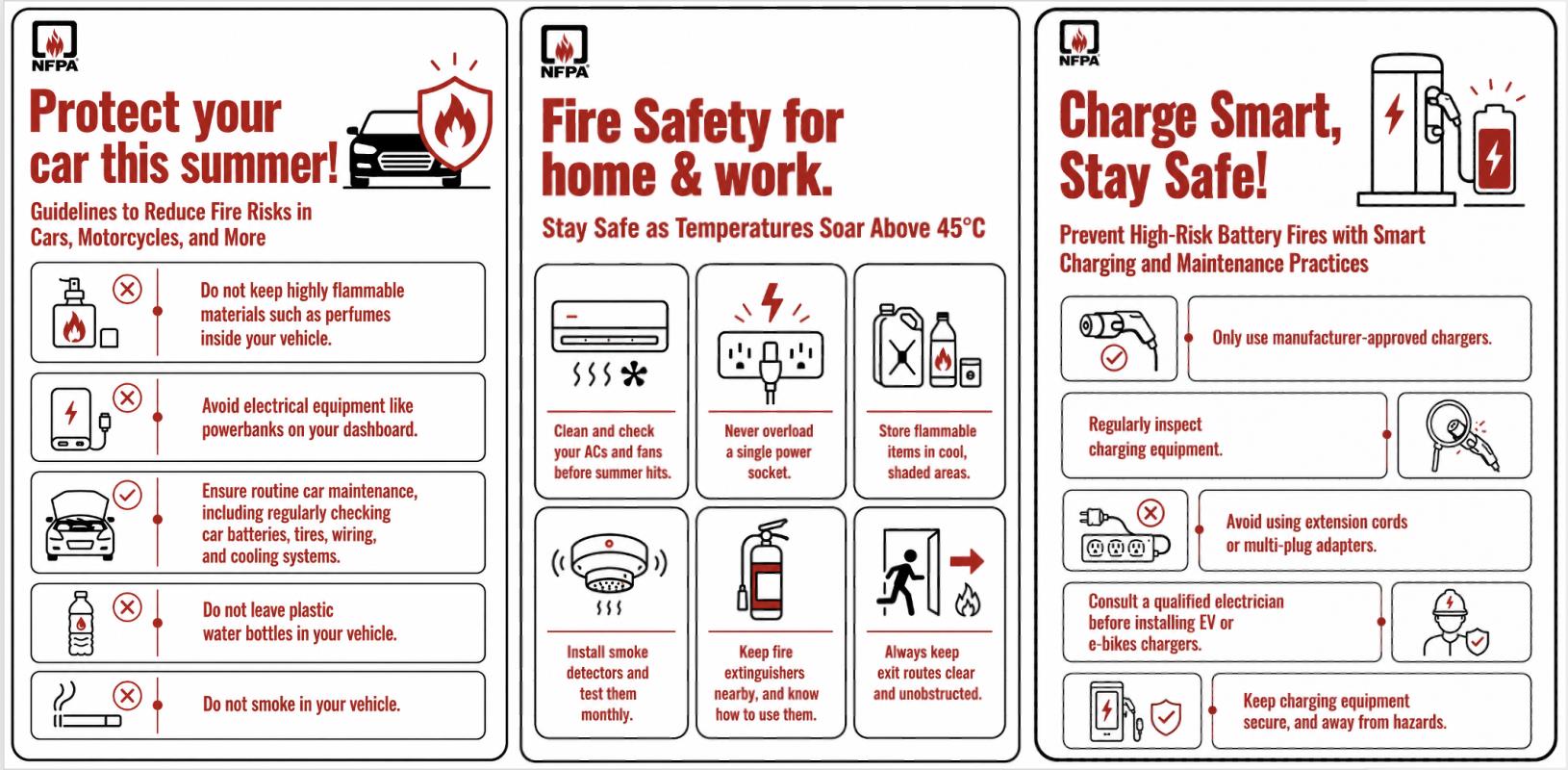
Air conditioning systems are a prime example. During the summer, they often run continuously, driving up electrical demand and placing equipment under greater stress. Units that have not been inspected or serviced may be more vulnerable to mechanical and electrical faults. For this reason, routine air-conditioner maintenance is one of the most effective fire-prevention measures residents can take. Regular servicing not only improves performance and efficiency but also helps identify potential hazards before they lead to more serious incidents.
Heat-related risks are not limited to cooling systems. As households increasingly rely on portable air conditioners, fans, chargers, and other electrical devices, the strain placed on residential electrical circuits also increases. Overloaded extension cords[1] and multi-plug adaptors remain among the leading causes of residential electrical fires globally, as ambient temperatures reduce a cable’s ability to dissipate heat. To effectively reduce risks, residents should avoid connecting multiple high-power appliances to a single outlet, inspect cords and plugs for signs of wear, and disconnect devices or adaptors that feel unusually warm to the touch.
This is just one example of how extreme heat can affect how household items function. Aerosol cans, lighter fluid, cleaning chemicals, and lithium batteries[2] also become hazardous when exposed to elevated temperatures.
To mitigate the risk of a serious incident, keeping these items in cool, shaded, and well-ventilated spaces is a small but preventive habit.
While prevention remains the first line of Defence, preparedness is equally important. Even with the most rigorous safety practices, emergencies can still occur, making early detection and rapid response critical.
For all the world’s emerging, high-tech innovation, if maintained, a working smoke alarm is the single, most effective early-warning device in any home.[3] Smoke alarms provide precious seconds that can enable residents to escape safely and alert emergency responders before a fire spreads. To ensure they function properly when needed most, occupants should test alarms at least once a month using the test button, and follow manufacturers’ maintenance recommendations.
As a general rule, firefighting should be left to professional firefighters. Portable fire extinguishers are meant for putting out small fires or used to help escape from the area, not for fighting large, out-of-control fires. Only those who are trained or know how to use a portable fire extinguisher should use one.
Preparedness also extends beyond individual apartments and villas. In densely populated urban centers across the region, high-rise living has become the norm, making evacuation planning and shared responsibility increasingly important.
With high-rise living becoming commonplace[4], exiting a building safely requires a collective effort of residents to keep corridors, stairwells, and exit routes free of obstruction to ensure the protection of both their own households and everyone who shares the building.
Fire safety is often seen as the responsibility of engineers, inspectors, or emergency responders. In reality, some of the most effective preventive measures are everyday safety practices—from servicing air conditioners and avoiding electrical overloading to testing smoke alarms and storing heat-sensitive items safely.
Fortunately, countries across the Middle East are home to some of the world’s most advanced infrastructure, building codes, and civil defence capabilities. At the same time, fire prevention begins long before the emergency services are called and starts with the everyday decisions made in homes, offices, and public spaces.
As temperatures peak this summer, a few proactive steps can go a long way in protecting lives, property, and communities from preventable fire incidents.
[1] https://www.nfpa.org/education-and-research/research/nfpa-research/fire-statistical-reports/home-electrical-fires
[2] https://www.nfpa.org/education-and-research/research/fire-protection-research-foundation/projects-and-reports/lithium-ion-batteries-hazard-and-use-assessment
[3] https://www.nfpa.org/education-and-research/research/nfpa-research/fire-statistical-reports/smoke-alarms-in-us-home-fires
[4] https://www.nfpa.org/education-and-research/building-and-life-safety/high-rise-buildings